Agra Yamuna Monuments
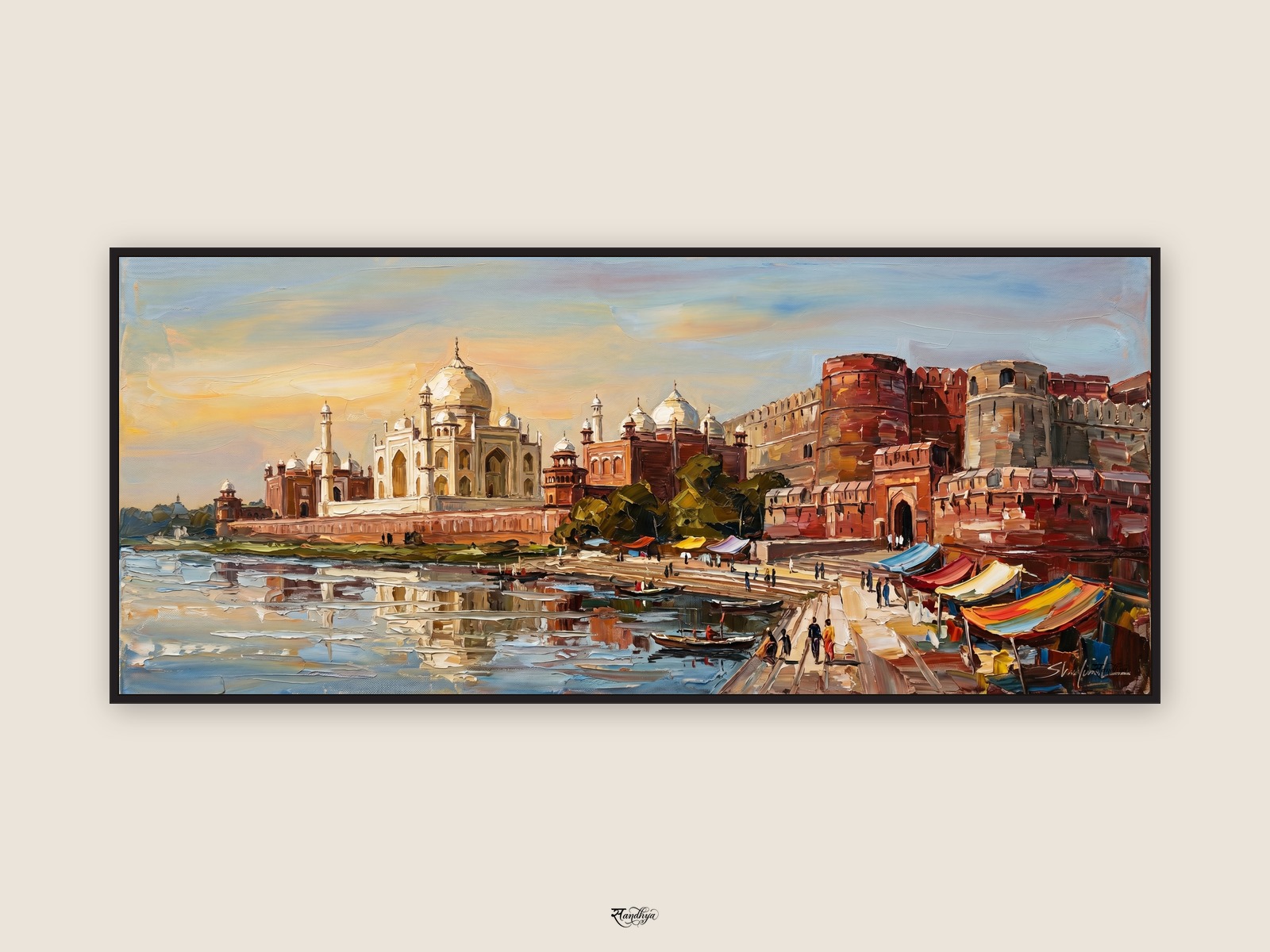
A panoramic sweep of Agra's Yamuna riverfront — the Taj Mahal luminous in white marble on the left, Agra Fort's massive red sandstone ramparts commanding the right, and between them the living river with its boats, ghats, and the colourful activity that tourists rarely see from the monument gardens above.
This wide-format composition exploits the panoramic canvas to create a sense of place that no single monument view can achieve. Sandhya positions the viewer at water level, looking across the Yamuna's broad surface. The Taj Mahal is rendered in remarkably restrained strokes — pale cream, soft grey, touches of rose — its domes and minarets suggested rather than detailed, floating above the scene with the ethereal quality that has made it the world's most recognised building. It is beautiful precisely because it is not overworked.
Agra Fort, by contrast, is built in aggressive impasto — heavy strokes of Indian red, burnt sienna, and dark umber that convey the fortress's military weight. The river between them carries reflected light in horizontal streaks of blue, gold, and grey. Along the near bank, the daily life of the Yamuna unfolds: wooden boats moored at makeshift ghats, colourful market awnings in yellow, red and blue, figures moving through the waterfront commerce. The sky stretches across the full width of the canvas in bands of warm gold fading to cool grey, unifying two monuments that represent opposite poles of Mughal ambition — one built for war, one built for love.
Why did Sandhya paint the Taj Mahal and Agra Fort together?
This panoramic painting shows the Yamuna River frontage as it actually exists — the Taj Mahal and Agra Fort are visible from the river, roughly 2.5 km apart. By painting them together in a wide format, Sandhya captures a view that most visitors never experience: the full sweep of Mughal Agra from water level, with daily life unfolding between two of humanity's greatest architectural achievements.